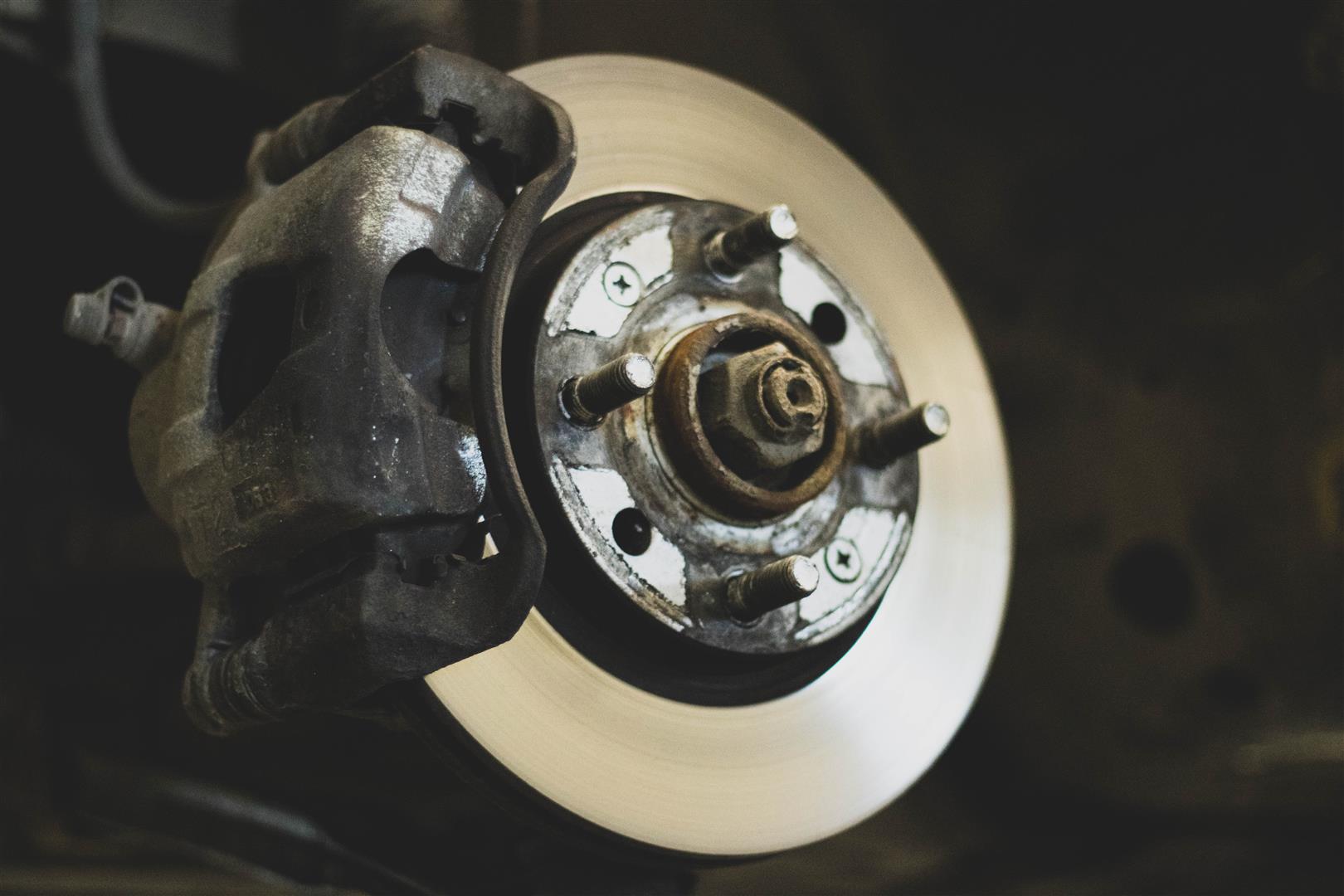
 Your vehicle’s brake system is one of its most important safety features, and brake rotors play a major role in how well your car stops. When it’s time for a brake service, many drivers ask the same question: Should brake rotors be resurfaced, or do they need to be replaced? The answer depends on their condition, thickness, and overall wear.
Let’s break down the difference and help you understand when each option makes sense.
https://www.youtube.com/watch?v=qa9qsURR9_E
What Do Brake Rotors Do?
Brake rotors work with your brake pads to slow and stop your vehicle. When you press the brake pedal, the pads clamp down on the rotors, creating friction. Over time, this friction causes wear, heat stress, and surface imperfections.
When Brake Rotors Can Be Resurfaced
Resurfacing (also called machining) involves removing a thin layer of metal from the rotor to create a smooth, flat surface again.
Rotors may be resurfaced if:
- They are still above the manufacturer’s minimum thickness
- There is minor warping or vibration
- The surface has light grooves or glazing
- There are no cracks or severe heat spots
- The vehicle manufacturer allows resurfacing
Benefits of resurfacing rotors:
- More affordable than replacement
- Restores smooth braking performance
- Reduces brake noise and vibration
- Extends rotor life when done correctly
⚠️ Important note: Every rotor has a minimum thickness specification. If resurfacing would make the rotor too thin, it should not be machined.
When Brake Rotors Should Be Replaced
In many cases, replacement is the safer and more reliable option—especially on modern vehicles.
Rotors should be replaced if:
- They are at or below minimum thickness
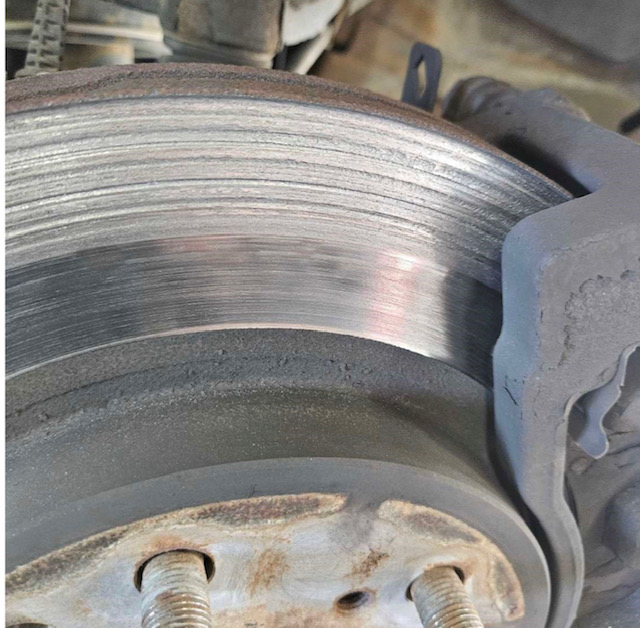
- There are deep grooves or scoring
- The rotor is cracked or severely warped
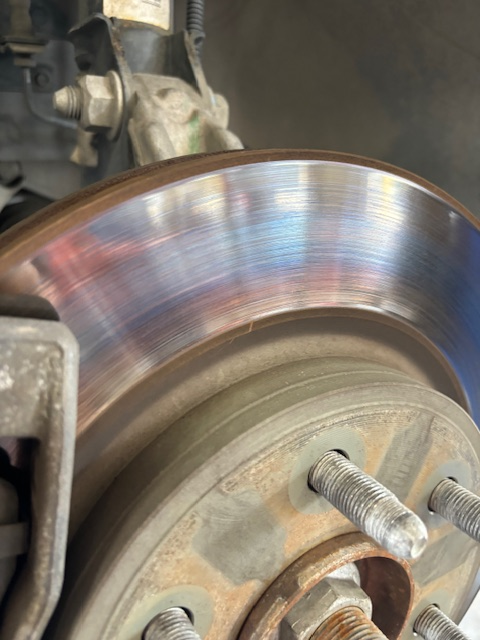
- There are blue or purple heat spots
- The vehicle experiences persistent brake vibration
- The rotor has already been resurfaced multiple times
- Manufacturer guidelines recommend replacement
Why replacement matters:
Thin or damaged rotors can overheat quickly, reduce braking performance, and increase stopping distance. In extreme cases, they can fail entirely.
Resurfacing vs. Replacing: What’s Best?
While resurfacing can save money in the short term, replacement often provides:
- Better heat dissipation
- Longer service life
- Improved braking performance
- Reduced risk of future brake issues
Many modern brake systems are designed with thinner rotors, which makes resurfacing less common than it once was. In those cases, replacement is usually the best choice.
Signs Your Rotors Need Attention
If you notice any of the following, it’s time for a brake inspection:
- Steering wheel vibration when braking
- Pulsation in the brake pedal
- Squealing, grinding, or scraping noises
- Reduced braking performance
- Uneven brake pad wear
Learn more from the shop - https://youtu.be/qa9qsURR9_E
Final Thoughts
Knowing when to resurface brake rotors versus when to replace them can help you make informed decisions about your vehicle’s safety and maintenance costs. The best option depends on rotor condition, thickness, driving habits, and manufacturer specifications.
If you’re unsure, a professional brake inspection can determine the safest and most cost-effective solution for your vehicle.
Safe brakes mean a safer drive—don’t wait until a small issue becomes a major repair.