Posted on 4/28/2023
Why Is My Car Shaking? Everyone has felt it, you jump on the freeway and as soon as you get up to speed the steering wheel starts to shake back and forth and never stops until you slow down There are a couple reasons that a car would shake when driving. Uneven tire wear, separating tires, and out of balance tires will all cause a shaking condition when driving. The shaking condition is usually noticed at higher speeds and will generally get worse the faster the vehicle goes. The most common problem that can cause a vehicle to shake is out of balance tires. Tires are balanced whenever they are replaced with new tires, however over time as the tire wears down the balance points change and the tire and wheel needs rebalanced to correct it. How Are Tires Balanced? We use a state of the art Hunter tire balancer, that allows us to simulate the tire actually driving on the road with its road force balancing program. This allows us to not only balance the tire but provides us with even bett ... read more
Posted on 2/15/2023
My car has a clattering or ticking noise? There are multiple things that can cause a rattle or ticking noise to happen on your vehicle. Today we’re going to talk about a rattling noise that has become very common on Dodge 5.7L Hemi engines. This truck came into the shop and had a complaint of an intermittent rattle or ticking noise. The noise wasn’t super loud and wasn’t rattling consistently however every two minutes it would have a slight clattering sound when idling. A stethoscope was used to pinpoint the location of the noise and found the noise was most prominent at the valve cover. Inspection Process: Now that we have narrowed down where the noise is coming from, a more intrusive inspection is needed. We know the clattering noise is coming from underneath the valve cover and at this point the valve cover needs to be removed for a visual inspection of the camshaft, push rods, & roller bearings. Once the valve cover was rem ... read more
Posted on 1/17/2023
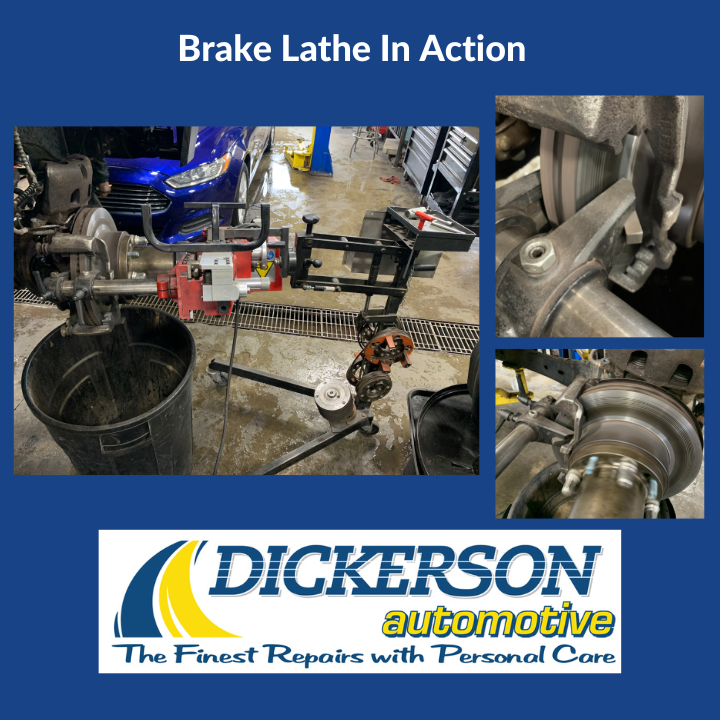
Why Does My Car Shake When Braking? Shaking when stepping on the brake pedal is usually an indicator of warped disk brake rotors. The technical term for this is called thickness variations in the brake rotors. The braking systems on a vehicle is a simple idea with complex components all working together at the same time, lets talk about how a braking system functions and what may be causing the famous shaking when braking problem. How Do Disk Brakes Work? It is easiest to explain this by breaking down the system to its most basic parts. Braking systems have a master cylinder, brake caliper, brake pads, and brake rotors. The master cylinder is full of brake fluid and is directly connected to the brake pedal. When the brake pedal is pressed a piston is forced forward inside the master cylinder creating hydraulic pressure in the brake lines. This hydraulic pressure is then sent to the brake caliper. There is a piston inside of the brake caliper t ... read more
Posted on 1/11/2023

Popping or Hissing Noises From The Engine Compartment? Many things can contribute to popping and or hissing noises while your engine is running. The most likely cause of these kinds of noises are related to exhaust issues. Most commonly issues with the exhaust manifold where exhaust gasses exit the vehicle. Today were going to discuss what an exhaust manifold is and what it's job is on your vehicle! What is an exhaust manifold? There are many components that make up an exhaust system, but one of the most important parts of that system is the exhaust manifold. The manifold is designed to route the toxic gases that come from an engine and send them through the rest of the exhaust system for cleaning and safe release from the vehicle. Exhaust manifolds are made out of cast iron or stamped steel, the reason being is these materials handle extreme heat temperatures. Average exhaust temperatures range from 400 degrees Fahrenheit to 500 degrees Fah ... read more
Posted on 12/28/2022

Lack Of Engine Power? Strange Rattle From The Engine? There are several reasons a vehicle will lack power when trying to accelerate. Today however were going to talk about lifters and how they can contribute to a lack of power when they aren't working properly.There are some warning signs that can be indicators of a bad lifter such as a rattling or ticking noise, misfire condition, or a check engine light. The most common indicators of a bad lifter are abnormal noises coming from the engine compartment and or a check engine light. So what does a lifter do? Lifters work directly with what is called the camshaft. The camshaft is a long piece of metal with some raised up sections called lobes. As the camshaft rotates the lobes make contact with the lifter and pushes the lifter up or down depending on camshaft location. When a lifter is moving up and down the valves inside the cylinder head are opening and closing allowing air and fuel into ... read more