A/C Compressor: How It Works and Signs It May Be Going Out
When summer temperatures climb, your vehicle’s air conditioning becomes more than just a convenience—it can make a long drive much more comfortable. But have you ever wondered what actually makes your A/C blow cold air?
One of the most important components in your vehicle's A/C system is the A/C compressor. Think of it as the heart of the air conditioning system. When the compressor isn't working correctly, your A/C may struggle to keep you cool.
What Does the A/C Compressor Do?
Your vehicle's A/C system doesn't actually "make" cold air. Instead, it removes heat and moisture from the air inside your vehicle.
The A/C system uses refrigerant to move heat from inside the passenger compartment to the outside of the vehicle. The compressor is responsible for circulating and pressurizing that refrigerant so the process can happen.
Here is a simplified version of the process:
- The compressor pressurizes the refrigerant.
The compressor takes in low-pressure refrigerant gas and compresses it, increasing its pressure and temperature. - The condenser releases the heat.
The hot, high-pressure refrigerant travels to the condenser, usually located near the front of the vehicle. Air flowing through the condenser removes heat from the refrigerant. - The refrigerant passes through the expansion device.
The pressure of the refrigerant is reduced, causing its temperature to drop. - The evaporator absorbs heat from the cabin.
Air from inside the vehicle passes over the cold evaporator. Heat is absorbed by the refrigerant, and cooler air is sent through your vents. - The cycle starts again.
The refrigerant returns to the compressor, and the process continues.
What Is the A/C Compressor Clutch?
On vehicles equipped with a traditional clutch-style compressor, an electromagnetic clutch allows the compressor to engage and disengage as needed.
When you turn your A/C on, you may hear a small click as the clutch engages. The compressor then begins circulating refrigerant. Depending on the vehicle and operating conditions, the compressor may cycle on and off while the A/C is running.
Some newer vehicles use variable-displacement or electronically controlled compressors, so they may operate differently and may not have a traditional clutch that behaves the same way.
Signs Your A/C Compressor May Be Going Bad
A failing compressor doesn't always stop working all at once. You may notice several warning signs first.
1. Your A/C Isn't Blowing Cold
One of the most obvious signs is that your A/C is blowing warm or only slightly cool air.
However, warm air does not automatically mean the compressor is bad. Low refrigerant from a leak, a problem with the condenser, an expansion valve, electrical issues, or other A/C components can also cause poor cooling.
That is why proper testing is important before replacing an expensive component.
2. Strange Noises When the A/C Is On
Pay attention to unusual noises coming from under the hood when you turn on your A/C.
Grinding, squealing, rattling, or other unusual noises can indicate a problem with the compressor, compressor clutch, pulley, or another component in the belt-drive system.
Not every A/C-related noise is caused by the compressor, so a technician should locate the source of the noise before parts are replaced.
3. The A/C Works Sometimes and Not Others
Does your A/C blow cold air one day but warm air the next? Or does it start cold and become warm?
Intermittent A/C operation can have several causes, including refrigerant level, compressor clutch operation, electrical problems, pressure issues, or a compressor that is beginning to fail.
If the compressor isn't properly circulating refrigerant, the system won't be able to consistently remove heat from the cabin.
4. The Compressor Clutch Doesn't Engage
On vehicles with a clutch-style compressor, you may notice that the compressor doesn't engage when the A/C is turned on.
However, this doesn't necessarily mean the compressor itself has failed. The vehicle may prevent the compressor from engaging because of refrigerant pressure, electrical problems, a faulty clutch, or other system issues.
A proper A/C diagnostic test can determine why the compressor isn't engaging.
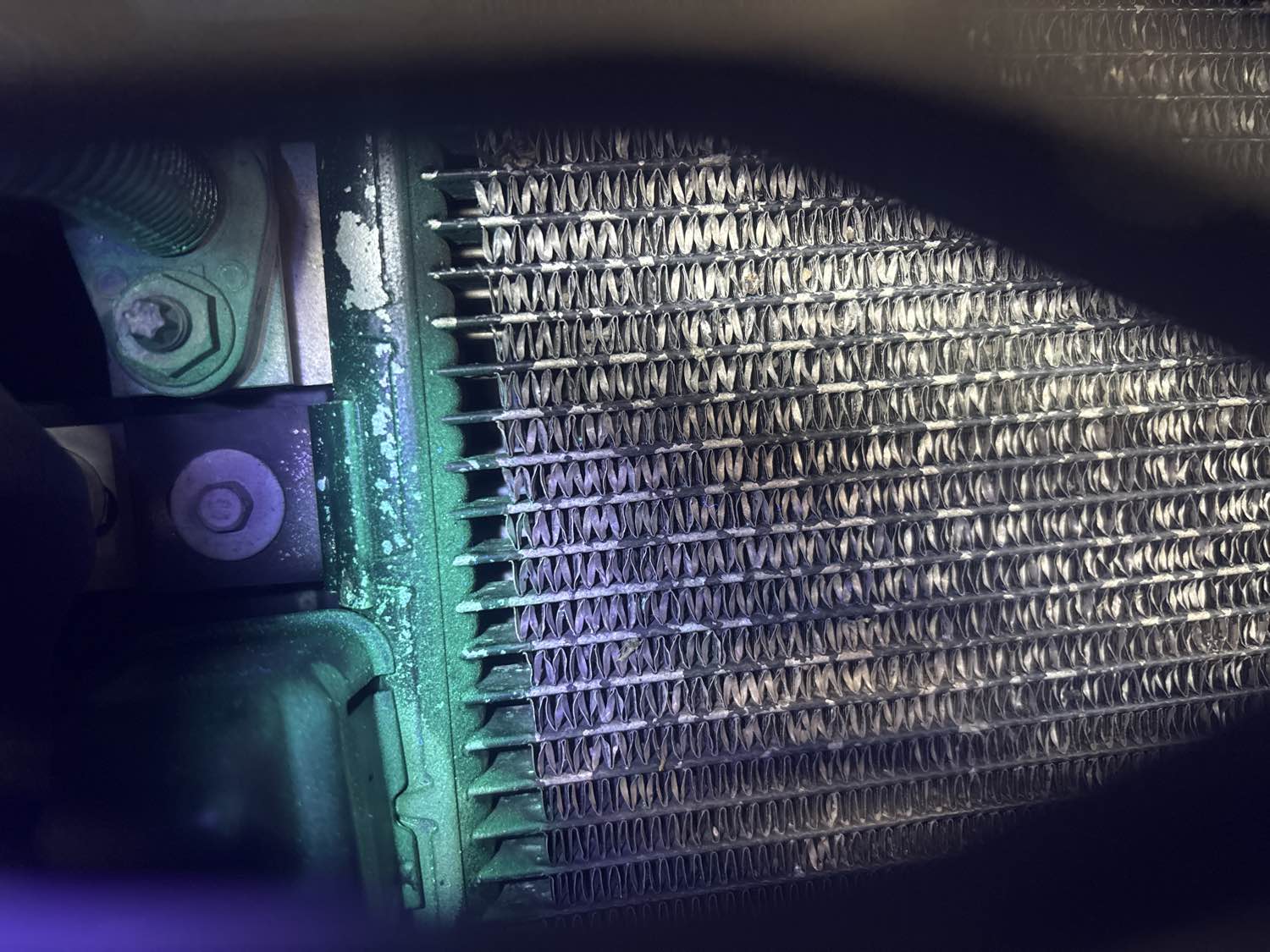
5. You Notice a Refrigerant or Oil Leak
Leaks can occur in different parts of an A/C system, including hoses, fittings, seals, the condenser, evaporator, or compressor.
A leak can cause the refrigerant level to become too low, resulting in poor cooling. Low refrigerant can also reduce lubrication available to the compressor because compressor oil travels through the system with the refrigerant.
6. Your A/C Makes the Engine Sound Different
Because the A/C compressor is driven by the engine through the accessory drive system, engaging the compressor adds a load to the engine.
A small change in engine sound or idle speed can be normal when the A/C turns on. However, significant vibration, squealing, grinding, or other unusual noises should be inspected.
A seized compressor can also create problems for the belt and other components in the accessory drive system.
What Causes an A/C Compressor to Fail?
There isn't just one reason a compressor can fail. Some common causes include:
- Low refrigerant caused by a leak
- Lack of proper compressor lubrication
- Normal wear over time
- Internal compressor damage
- Contamination or debris in the A/C system
- Electrical or clutch problems
- Problems with the belt or pulley system
- Incorrect refrigerant or oil service
Proper refrigerant and compressor oil levels are important because the oil lubricates the compressor's internal moving parts. DENSO notes that insufficient or incorrect compressor oil can contribute to compressor damage and failure.
Don't Assume You Need a New Compressor
If your A/C isn't working, it can be tempting to assume the compressor is bad. But the compressor is only one part of a much larger system.
A professional A/C diagnosis may include checking:
- Refrigerant pressures
- Refrigerant level
- System leaks
- Compressor operation
- Compressor clutch operation, when equipped
- Electrical controls
- Condenser operation
- Expansion valve or orifice tube
- A/C lines and connections
- Belt and pulley operation
In some cases, the problem may be something much simpler than a failed compressor.
What Should You Do If You Notice These Symptoms?
If your A/C isn't cooling like it used to, don't wait until it completely quits—especially if you're hearing unusual noises.
Catching an A/C problem early may help prevent additional damage to other components. If a compressor fails internally, debris can potentially circulate through the A/C system and make the repair more involved.
Keep Your Cool This Summer
Your vehicle's A/C system is made up of several components that have to work together to keep your cabin comfortable. The compressor plays a major role in that process, but diagnosing an A/C problem requires looking at the entire system.
Warm air, strange noises, intermittent cooling, or an A/C system that suddenly stops working are all good reasons to have your vehicle inspected.
At Dickerson Automotive, we can help determine what's causing your A/C problem and recommend the appropriate repair so you can get back to enjoying a cool, comfortable drive.
Sources